Village Zero
Project essay
A World in Five Views
Five residents can stand in the same village and have different evidence about what happened. Follow a parcel and a tavern invitation to see how the experiment works.
NSSL · Technion / Research project
Five language-model residents share a simulated village. Can they coordinate over time when each knows only part of what has happened?
Scientific motivation
Suppose an innkeeper asks for supplies. The merchant can agree. For the tavern to serve an evening meal, someone must have stock, an offer must remain open, and the right resident must get an opportunity to collect it. Each step leaves evidence of its own.
Village Zero puts five decision makers in a persistent world so we can locate the point where a plan succeeds or breaks down. A chatbot conversation can end with the promise. A scripted scene can guarantee the meal. Here, each resident chooses at their own turn, and the next resident encounters the consequences of earlier choices.
That lets us ask a systems question alongside a behavioral one. When cooperation stalls, did the agent receive the relevant information, have a legal way to act and get a turn in time?
Sources · Tavern stage receipts · CSV · Implementation references
World and residents
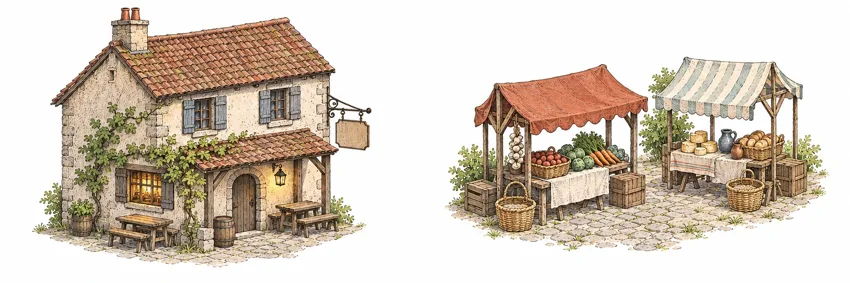
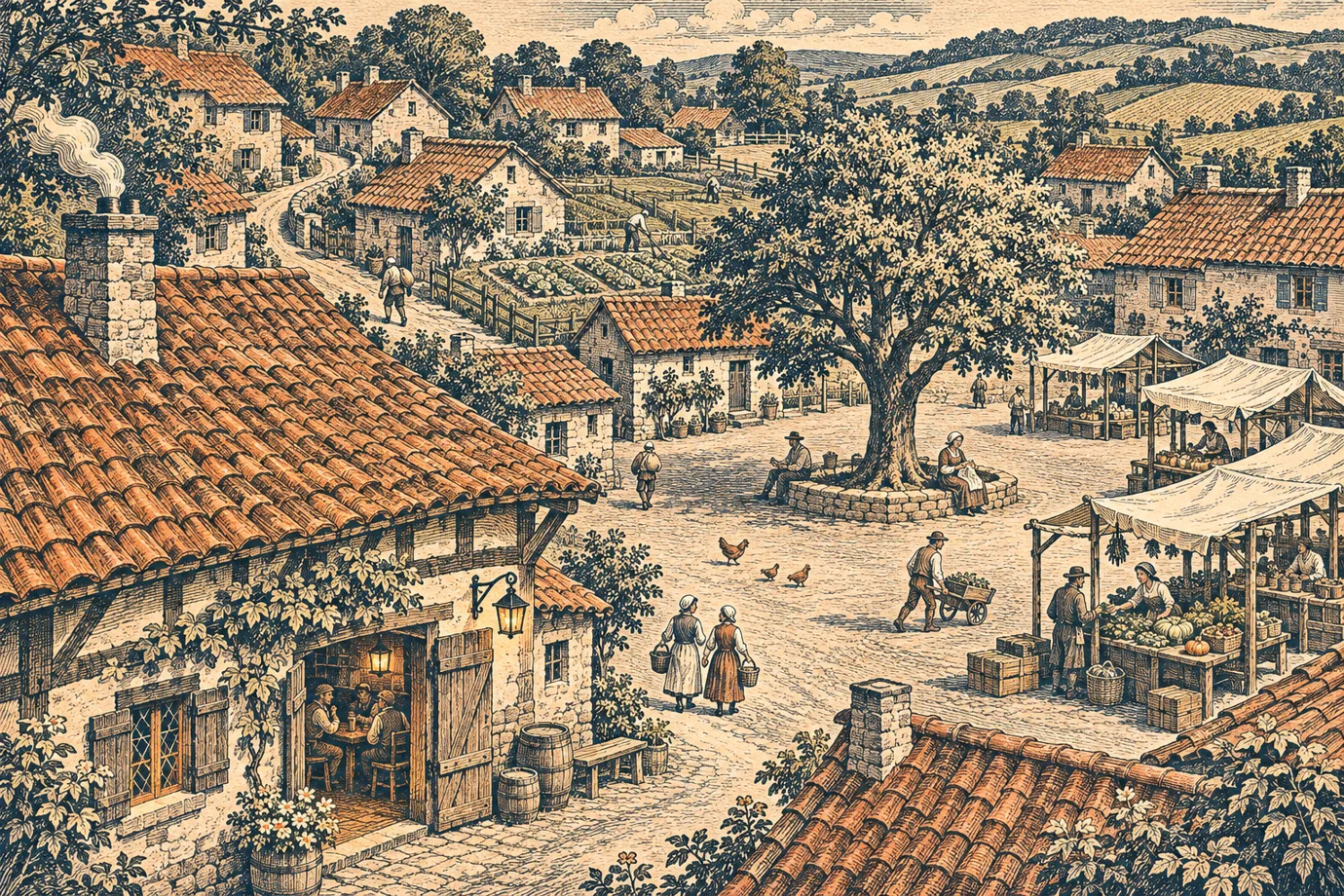
The square connects the tavern, market and residential area. Movement takes time. A visiting resident may see a peer or encounter an opportunity that someone elsewhere cannot see.
In Long-Life, a day contains two ticks. Walking from the square to the tavern or market takes one tick. The route to the homes takes two. A journey can continue on the clock after the resident’s initiating decision.
Roles change what a resident can do locally. Talia can pack produce at the homes when garden reserves, stock and the day’s work allow it. A local sale requires stock, a co-located buyer and an available offer. Residents can also deliver messages, invite one another to rest and decline.
Checkpoint R06 · end of day 24
| Location | Residents at tick 48 |
|---|---|
| Tavern | Mara, innkeeper · Nessa, village gossip |
| Market | Ilan, merchant · Toren, smith |
| Homes | Talia, gardener |
| Village square | No resident present |
Sources · R06 checkpoint and route graph · Implementation references
System architecture
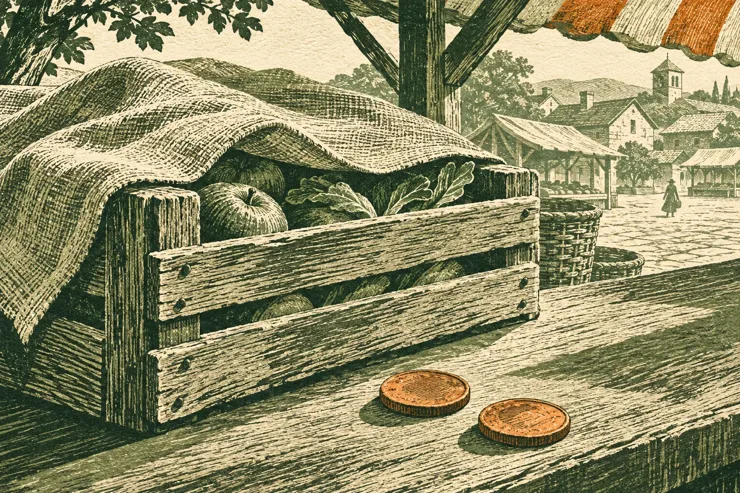
Five residents share a language model. On Toren’s turn it sees the smith’s surroundings, selected memories and the actions open to him. A promise to pay can reach a neighbour as speech. Moving two coins requires him to choose a valid purchase and the engine to apply it to both accounts.
Giving the World Engine custody of the accounts makes a sale independently checkable. Limiting each resident’s view lets us trace how news travels. Giving the scheduler a fixed number of turns makes attention a resource that residents can lose while an offer is open.
Sources · Implementation references · R07/B · memory selection for call 294
A decision in the tavern
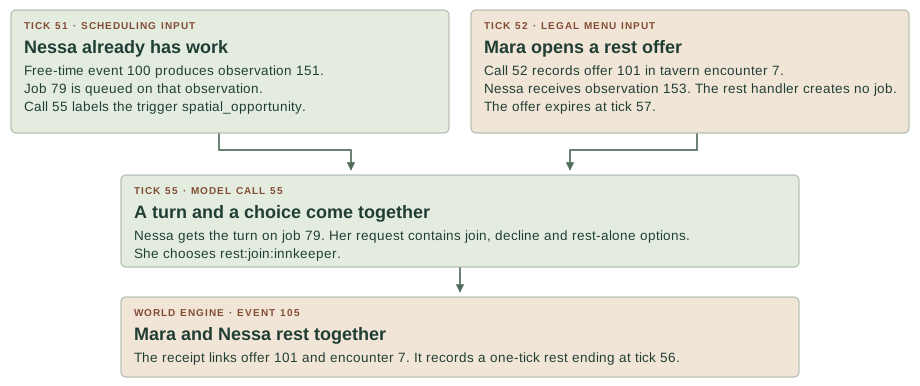
In R06/A two things had to line up. Nessa needed a turn, and Mara’s invitation had to be actionable when it arrived. The records give a different origin for each.

rest:join:innkeeper. The engine checks the live offer, encounter and participants before applying the operation.Sources · R06/A · job 79, offer 101 and receipt 105 · Implementation references · Open the full-size decision diagram
Related work
Imagine inviting a neighbour to a party. Smallville asks whether invitations travel and guests arrive. Concordia asks how a scenario should interpret a participant’s intended action. AI Town makes conversations and movement part of a persistent town that people can join.
Village Zero asks a narrower question about that same invitation. Did the neighbour ever receive a turn while accepting was possible, and what did the engine record? Keeping the scheduler, the menu and the outcome separately observable lets us investigate a missed meeting.
Primary sources · Park et al. on Smallville · DeepMind on Concordia’s Game Master · AI Town project
Scientific method
A branch starts from a saved state. Before reading a performance difference as behavior, we ask what options the two branches exposed and how much model time each received.
In Long-Life, eight separately seeded histories ran for 24 days. We copied each tick-48 checkpoint into A and B, assigned the same generation seed within a pair, then observed the next 72 days.
An invitation, a prompt that offers a response and a completed joint rest are three observations. We compare branches within each history and report the paired roots. Repeated turns share a world.
A saved state can isolate a particular offer. We can inspect the available actions, vary the buyer’s next turn and use a scripted legal purchase as a mechanical control.
Sources · Eight paired histories · CSV · R06/A · job 79, offer 101 and receipt 105 · Six replay outcomes · CSV
Research results
B delivered more messages in all eight matched histories. Completed joint rests rose in three, fell in two and tied in three. The median paired change in rests was zero.

A recorded 32 completed joint rests across 38 turns that offered a join. B recorded 36 across 74 such turns. In R06 the opportunity appeared nine times in A and once in B. Every one produced a joint rest.
Across the eight 72-day continuations, A used 1,152 model calls and 148.9 minutes of model evaluation. B used 2,943 calls and 387.6 minutes. The two schedules exposed different residents and opportunities at different costs.
Sources · Eight paired histories · CSV · 112 turns offering joint rest · CSV · Runtime by phase · CSV
In an earlier three-resident village, all 42 scored detail instances from six direct accounts reached the merchant’s input. Six were fully present in the next utterance. See the three routes.
Seven of 12 controlled three-resident worlds completed the meal service. Four autonomous starts produced four prepared crates and two collections. None reached service within the observation window. Follow the crates.
From one saved offer, both immediate-turn replays produced a purchase. All four deferred replays reached expiry without one. A follow-up gave a buyer who inspected an offer another chance to act. Compare the two interventions.
Sources · Telephone Game scoring · CSV · Tavern stage receipts · CSV · Six replay outcomes · CSV · Experiment 73 · 24 continuations and their outcomes · Study designs, models and observation windows
Compute and runtime
Including the 24-day common histories, the Long-Life run made 4,479 decision calls to qwen3.8:27b on an NVIDIA RTX A5000. Processing the prompts and generating the replies took 9.76 model hours. The complete job, through archiving, took about 11 hours 13 minutes.
The model processed 17,230,730 input tokens and generated 768,521 output tokens. Restricting what enters a turn therefore matters both for what the resident knows and for how much computation the experiment takes.
Current limits and research directions
The current system can settle a sale and record shared activity. Sustaining cooperation across many opportunities is a larger empirical question.
Repeat quiet and active histories from more starting states. Count turns with feasible actions, the length of quiet intervals and which events end them.
A retrieved record can appear before a decision. A controlled removal or replacement, with the same legal options and scheduler, could test whether it changes what the resident does.
Compare schedules at matched call budgets as well as matched simulated time. Measure completed activities, who received a turn and how opportunities were distributed.
Sources · Eight paired histories · CSV · 52 turns with a purchase option · CSV · Six replay outcomes · CSV
Publications and resources
Begin with the five residents. Then follow a single crate through conversation, a legal offer and replay.
Project essay
Five residents can stand in the same village and have different evidence about what happened. Follow a parcel and a tavern invitation to see how the experiment works.
Experimental case study
Toren has four coins. Ilan offers him a crate for two. Follow the purchase to its receipt, then return to the open offer and change when the smith gets his turn.